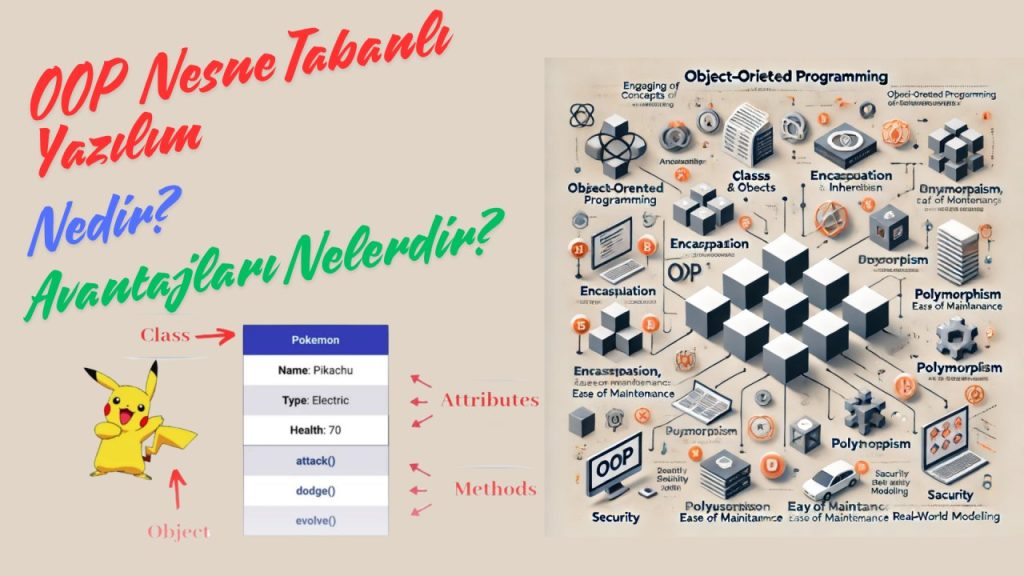
Object-oriented programming (OOP) is known as a paradigm that has revolutionized the world of software development. OOP offers an approach that makes software more modular, reusable, and maintainable. In this article, we will discuss what OOP is, its core concepts, and its advantages.
Core Concepts of OOP
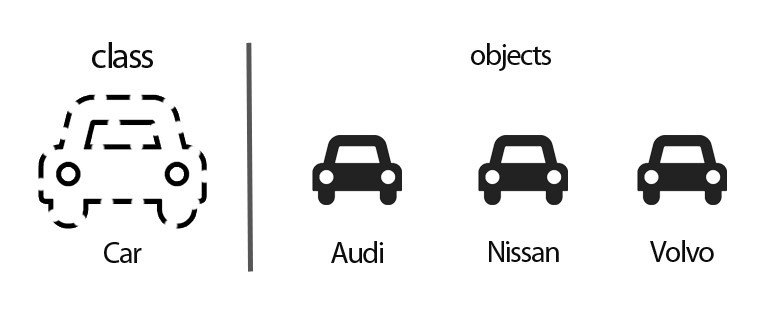
- Classes and Objects
- Classes: Classes are templates that define the properties and behaviors of a particular object. A class contains variables (properties) and functions (methods).
- Objects: Objects are real-world entities derived from classes. Each object is an instance of a class and possesses the properties and methods defined in the class.
Classes and Objects
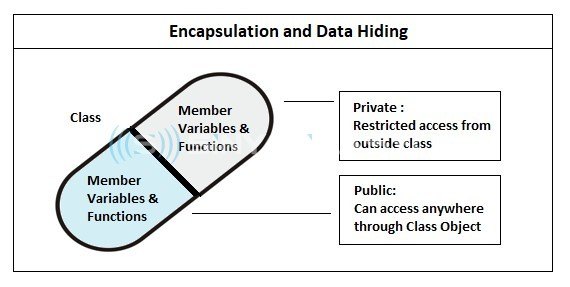
- Encapsulation
Encapsulation keeps data and the methods that control access to that data together. This restricts direct access to the data from outside, enhancing security. Encapsulation makes the software more organized and manageable.
Encapsulation
- Inheritance
Inheritance allows one class (subclass) to inherit the properties and methods of another class (superclass). This increases code reusability and makes the software more modular.
Inheritance
- Polymorphism
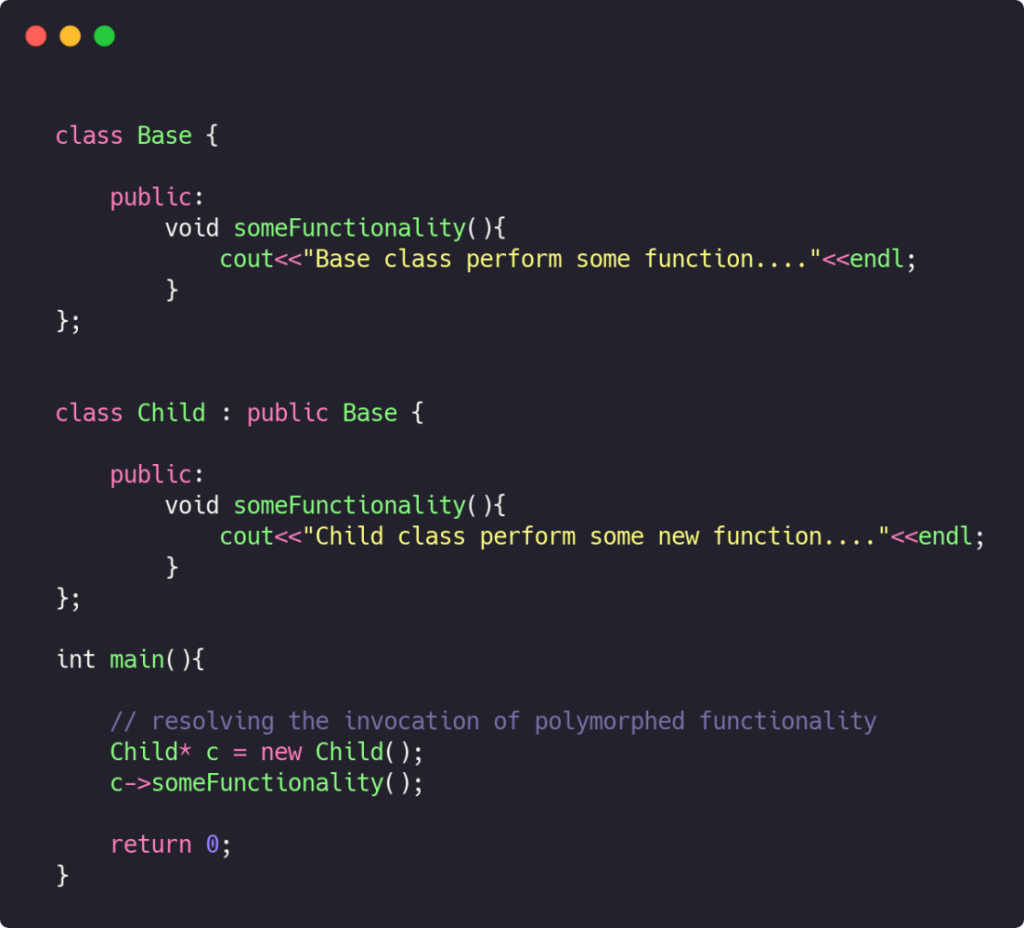
Polymorphism is the ability to use methods with the same name in different ways. This is typically achieved through method overloading and method overriding. Polymorphism allows for flexible and dynamic software development.

Polymorphism Example
- Abstraction
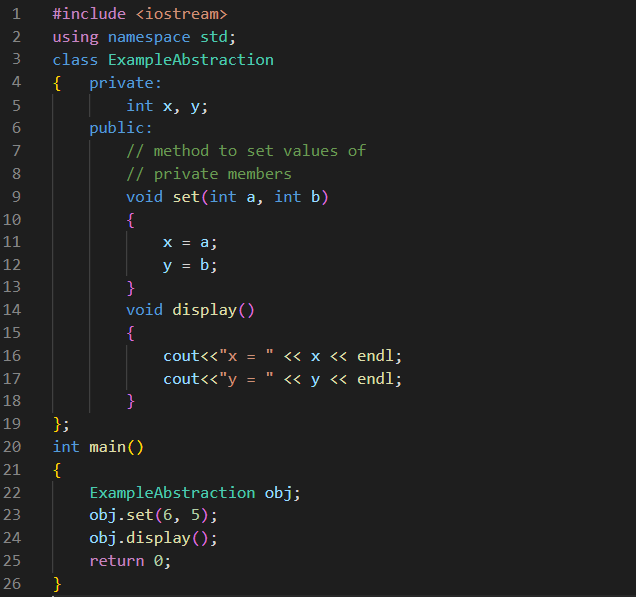
Abstraction reduces complexity by showing only the necessary details. This allows users to see only the relevant information and work in a simplified manner, free from unnecessary details.
Abstraction Example
Advantages of OOP
- Modularity and Reusability
OOP allows code to be written in small, manageable parts. Classes and objects can be reused, speeding up the development process.
- Ease of Maintenance and Development

Encapsulation and abstraction make software maintenance and development easier. Changes are typically made through well-defined interfaces between classes and objects.
- Security
Encapsulation ensures that data is protected against unauthorized access, making the software more secure.
- Real-World Modeling
OOP is ideal for modeling real-world entities and relationships, making the software more natural and understandable.
Output Result
Conclusion
Object-oriented programming is an indispensable approach in modern software development. Thanks to its core concepts like classes, objects, encapsulation, inheritance, polymorphism, and abstraction, OOP makes software more modular, flexible, and maintainable. The advantages offered by OOP make the software development process more efficient and effective. Therefore, understanding and applying OOP is a significant advantage for software developers.
This article was first published on LinkedIn on 18 June 2024.