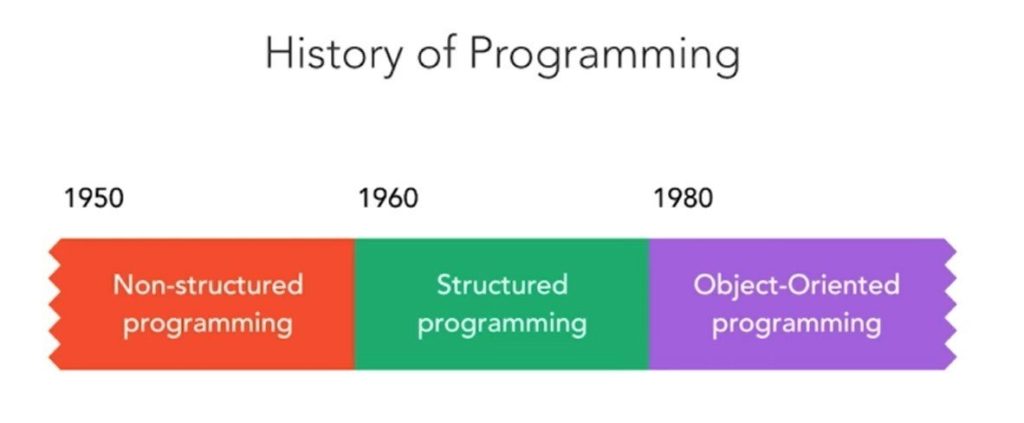
The software world offers various programming approaches to suit different needs. Three of these paradigms – Unstructured, Structured, and Object-Oriented Programming (OOP) – stand out, each with unique advantages and applications. Here’s a detailed look at these approaches along with examples of associated programming languages and applications:
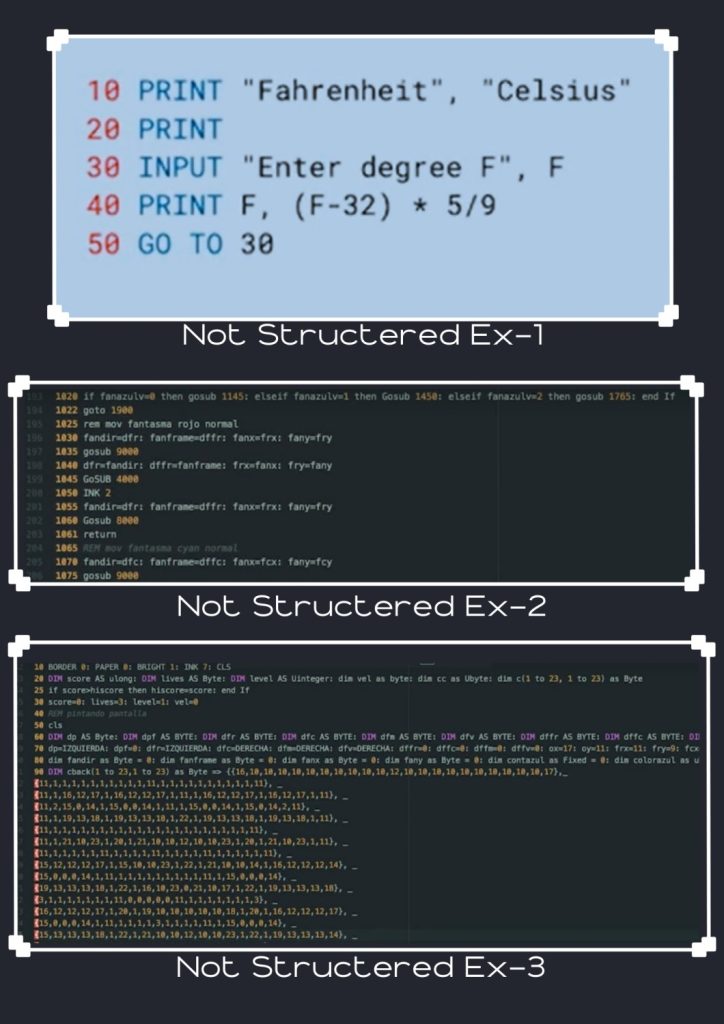
Unstructured Programming
Features: Primarily based on the free flow of code, with minimal use of functions or modules.
Language Examples: Early BASIC and old versions of FORTRAN are examples that followed this approach.
Application Examples: Quick prototypes, small scripts, and simple programs for educational purposes.
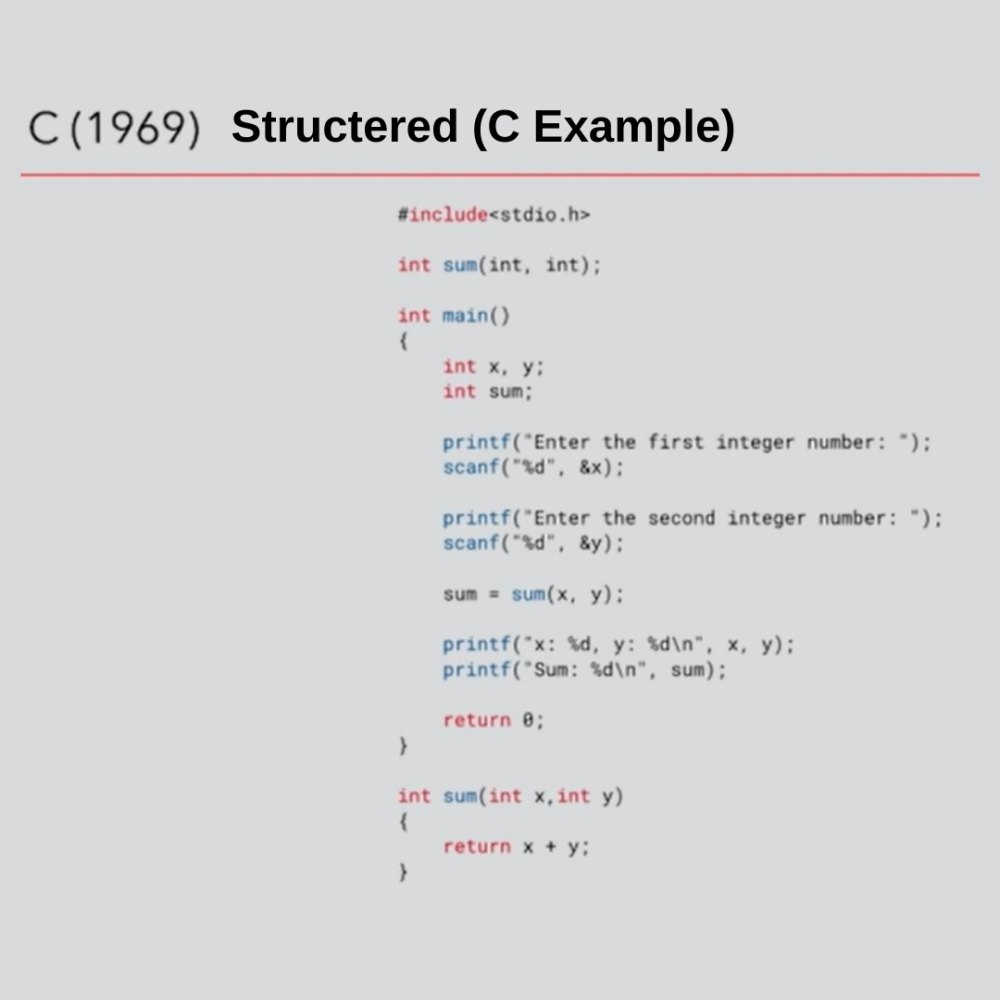
Structured Programming
Features: Uses functions and control structures (like if-else, for, while) to make the code modular and comprehensible.
Language Examples: Languages like C, Pascal, and Ada adopt the principles of structured programming.
Application Examples: Larger and more complex software such as financial systems, database management, and operating systems.
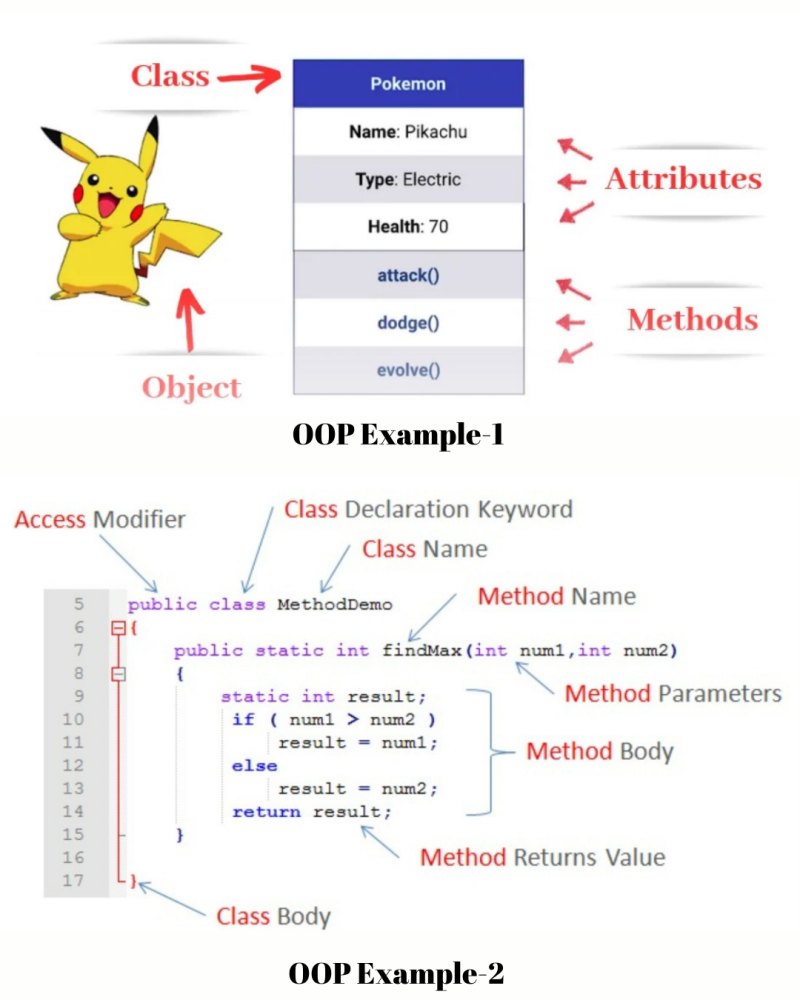
Object-Oriented Programming (OOP)
Features: Facilitates code reuse and expansion through classes and objects. Includes fundamental concepts like inheritance, polymorphism, and encapsulation.
Language Examples: Languages such as Java, C++, and Python support the OOP approach.
Application Examples: Video games, commercial software solutions, and large-scale data systems.
Each of these paradigms offers specialized approaches to solving specific problems. Which programming language and paradigm do you prefer to use? Share your experiences and thoughts to contribute to this discussion!
This article was first published on LinkedIn on 24 May 2024.