What is ASIC?
An ASIC (Application-Specific Integrated Circuit) is a type of integrated circuit that is designed for a specific application or task. Unlike general-purpose microprocessors, ASICs are optimized to perform a particular function. As a result, they can be more efficient in terms of performance, power consumption, and cost (for mass-produced products). ASICs are used in a wide range of electronic devices and systems, including mobile phones, satellite receivers, data centers, and industrial devices designed for specific tasks.
History of ASICs
The development of ASICs is closely related to the general history of integrated circuits. The first integrated circuits (ICs) were developed in the late 1950s and became commercially available in the 1960s. These early circuits were usually general-purpose and not aimed at a specific application.
By the 1980s, the complexity and specific requirements of electronic devices increased. During this period, the concept of ASIC emerged. The first ASICs were integrated circuits optimized for a specific application and not usable for other applications. Significant advancements were made in ASIC design and manufacturing in the mid-1980s, accelerating the widespread adoption of this technology.
In the 1990s, advancements in semiconductor manufacturing technology allowed for the production of more complex and powerful ASICs. During this period, the software tools and methodologies used for ASIC design also improved significantly. By the 2000s, ASICs were being used in a wide range of applications, including mobile devices, communication infrastructures, and consumer electronics. Today, ASICs play a critical role in high-performance computing, artificial intelligence, cryptocurrency mining, and many other fields.
ASIC Architecture
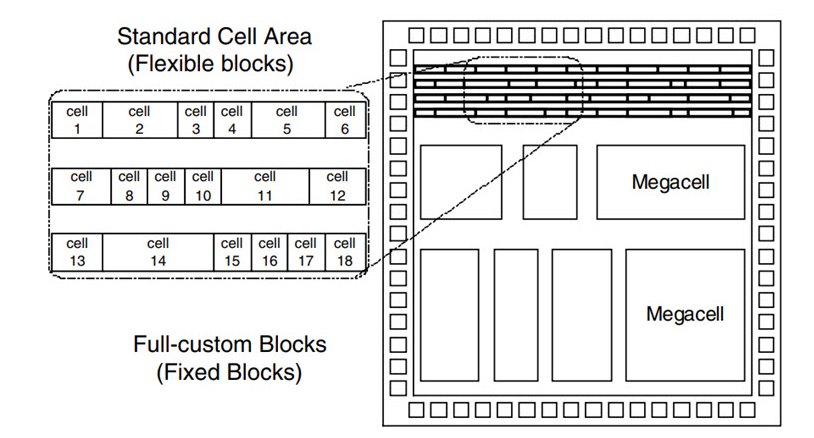
The architecture of ASICs is customized according to the requirements of a specific application. This is the fundamental characteristic that distinguishes ASICs from general-purpose integrated circuits. An ASIC design typically includes the following components:
- Logic Gates and Flip-Flops: ASICs use logic gates and flip-flops to perform basic logical operations. These components are combined to perform a specific function.
- Memory Units: ASICs use various memory units such as SRAM, DRAM, or flash memory for data storage and access.
- Input/Output (I/O) Blocks: ASICs have various I/O blocks to interact with the outside world. These blocks manage data transfer and support different data communication protocols.
- Clock Management: ASICs include clock management units to synchronize and distribute internal clock signals. This ensures that the entire circuit operates in harmony.
- Power Management: ASICs use various power management techniques to optimize energy efficiency. This is important for extending battery life and reducing overall power consumption.
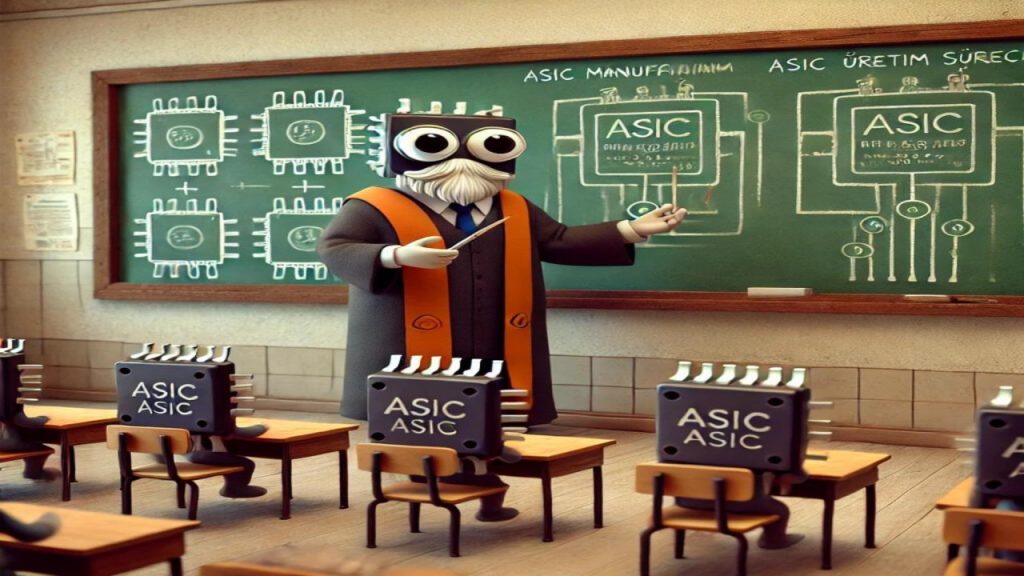
ASIC Manufacturing Process
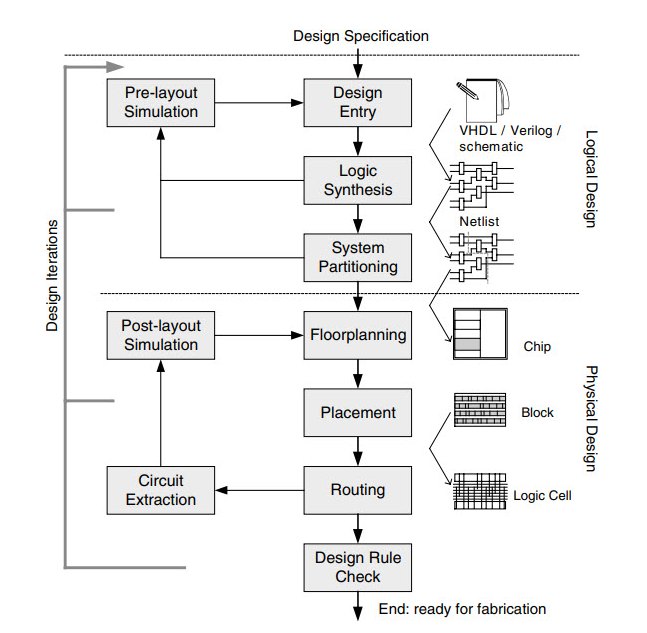
The ASIC manufacturing process is highly complex and involves multiple stages. This process begins with the design phase and continues through manufacturing, testing, and packaging. Here are the main stages of the ASIC manufacturing process:
- Design and Verification: The ASIC design is created based on the requirements of a specific application. This phase involves logic design, circuit simulation, and verification. The design is typically done using hardware description languages (HDLs) such as VHDL or Verilog and simulated using software tools.
- Logic Synthesis and Placement: After the design is verified, the logic synthesis process is carried out. This process converts the high-level design description into physical circuit components. Then, the circuit components are placed and connected on the semiconductor wafer.
- Physical Design: After logic placement, the physical design phase begins. This phase optimizes the placement and routing of circuit components. It also ensures that electrical properties and timing requirements are met.
- Masks and Manufacturing: Once the physical design is complete, a set of photomasks required for manufacturing is created. Photomasks are used to write the circuit patterns onto the semiconductor wafers. These wafers are produced in semiconductor fabrication plants (fabs) and have a multi-layered structure.
- Semiconductor Wafer Processing: During wafer processing, circuit patterns are created on the wafers using photolithography, doping, metallization, and other semiconductor processes. These stages determine the electrical properties and performance of the wafers.
- Testing and Verification: After manufacturing is complete, the ASICs are tested and verified. During this phase, the functionality, performance, and reliability of the circuits are tested. Faulty or low-performance ASICs are discarded.
- Packaging and Assembly: Once testing is complete, the ASICs move to the packaging phase. Packaging protects the ASICs from external factors and provides connections. Packaged ASICs are then assembled into final products.
Advantages and Disadvantages of ASICs
ASICs have many advantages and some disadvantages. Here are the main ones:
Advantages
- High Performance: ASICs offer very high performance because they are optimized for a specific application.
- Low Power Consumption: ASICs can be optimized for energy efficiency, resulting in lower power consumption.
- Cost Efficiency: For high-volume production, ASICs can be cost-effective per unit.
- Compact Design: ASICs can be smaller and more compact because they are optimized to perform a specific function.
Disadvantages
- High Initial Costs: ASIC design and manufacturing require high initial costs.
- Long Design Process: ASIC design and manufacturing is a long and complex process.
- Lack of Flexibility: Once manufactured, ASICs cannot be modified or reprogrammed.
- High Risk: Errors in ASIC design can require redesign and manufacturing, which can be costly.
In conclusion, while ASICs provide excellent performance and energy efficiency for specific applications, they come with high initial costs and lack flexibility. If you are considering using ASICs in your projects, you should carefully evaluate these advantages and disadvantages.
This article was first published on LinkedIn on 8 July 2024.