VHDL (VHSIC Hardware Description Language) is a hardware description language used for the design and verification of digital systems and, though limited, certain analog systems. Yes, you heard that right – VHDL can be used for analog designs, but those instances are rare. We will cover this in more detail in future articles.
Developed as part of the VHSIC (Very High-Speed Integrated Circuit) program, VHDL has become the standard for defining, simulating, and synthesizing digital circuits and systems.
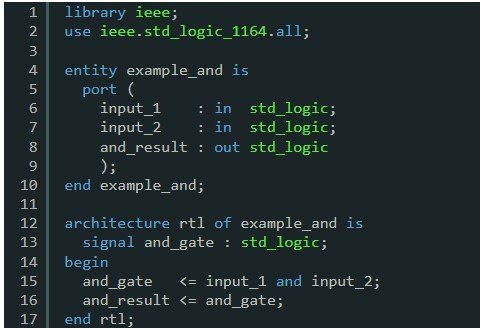
Definition of VHDL
VHDL allows for the detailed and precise definition of complex hardware structures and behaviors. This language supports both structural and behavioral modeling, offering flexibility to designers. Basic building blocks like Entity, Architecture, and Process enable designers to define complex circuits in a modular and readable manner. Think of it like LEGO pieces; each piece (Entity and Architecture) is part of a puzzle, and Process tells you how to use the puzzle pieces.
The Role of VHDL in Digital Design
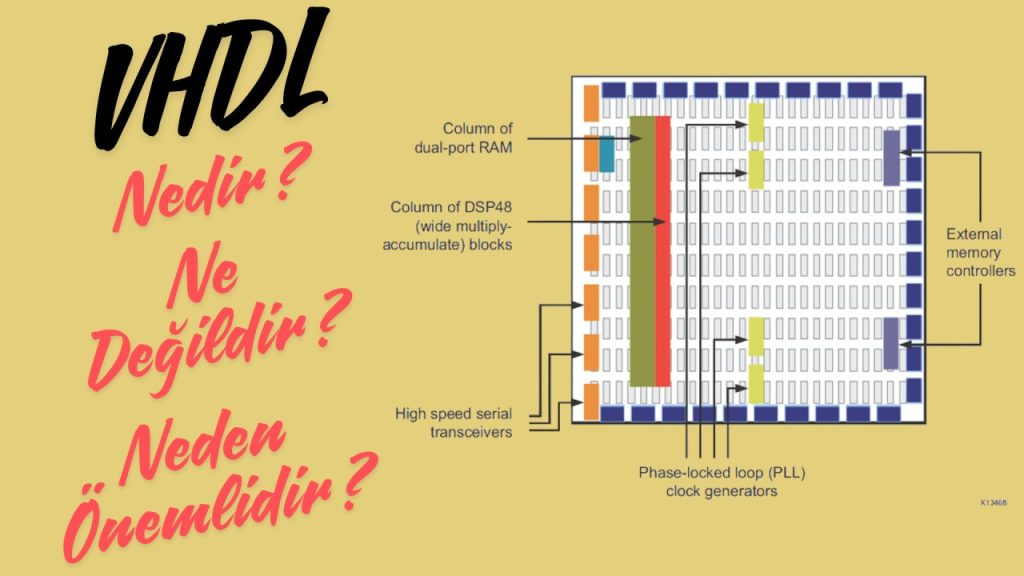
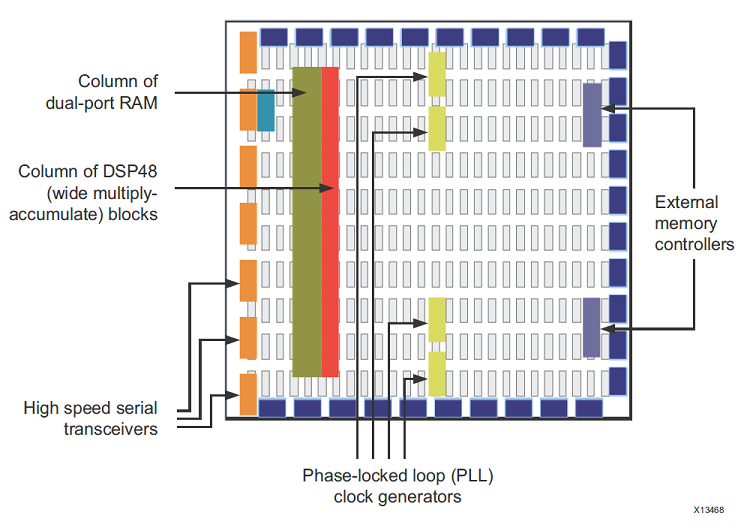
In the world of digital design, VHDL plays a critical role. It has become a standard tool for developing integrated circuits (ICs), FPGAs (Field-Programmable Gate Arrays), and ASICs (Application-Specific Integrated Circuits). Now you might ask, “What are FPGA and ASIC?” Simply put, these are programmable hardware devices. Imagine you have a bag filled with various logic gates, LUTs (Look-Up Tables), flip-flops, DSPs, RAMs, and multiplexers. You also have an oscillator generating a clock signal. You want to combine these elements to create a product. The bag containing all these elements is the FPGA, and the verbal part that describes how to place and connect them is VHDL. We will discuss FPGA architecture in detail in future articles.
VHDL enables high-accuracy simulations, allowing designs to be verified and errors to be detected early. This makes the development process more efficient and reduces costs. Who wouldn’t want to cut costs, right?
Advantages of VHDL
Using VHDL has many advantages:
- Portability and Standardization: VHDL is defined under the IEEE 1076 standard, ensuring compatibility across various tools and platforms. This allows designs to be easily transferred between different environments. In other words, write once, run anywhere.
- Modularity and Reusability: VHDL supports modular design, allowing components to be reused. This speeds up the development process and makes design maintenance easier. Remember those LEGO pieces?
- Verification and Testing: VHDL allows comprehensive verification and testing of designs. With testbenches and simulation tools, design errors can be detected and corrected early in the development process.
- Flexibility and Power: VHDL supports both high-level behavioral modeling and low-level structural modeling. This flexibility allows designers to work in the most suitable way for their needs. Whether you need detailed or general modeling, VHDL has you covered.
In conclusion, VHDL is a critical tool in digital system design. With high-accuracy simulations, portability, modularity, and powerful verification capabilities, VHDL helps designers successfully complete complex projects. Understanding the power and importance of VHDL in the world of digital design will make a significant difference in your future projects. VHDL is an indispensable friend to designers!
What VHDL Is Not
While VHDL is a powerful tool in the world of digital design, it can be misunderstood and misused. Understanding what VHDL is not is crucial for using this language correctly and efficiently:
- VHDL Is Not a Programming Language: VHDL can often be confused with software programming languages. However, VHDL is a hardware description language, and its primary purpose is to define and simulate hardware circuits. Unlike software programming languages like C++, Java, or Python, VHDL’s goal is to describe the physical behavior and structure of hardware. Think of it as writing the DNA of the hardware, not software.
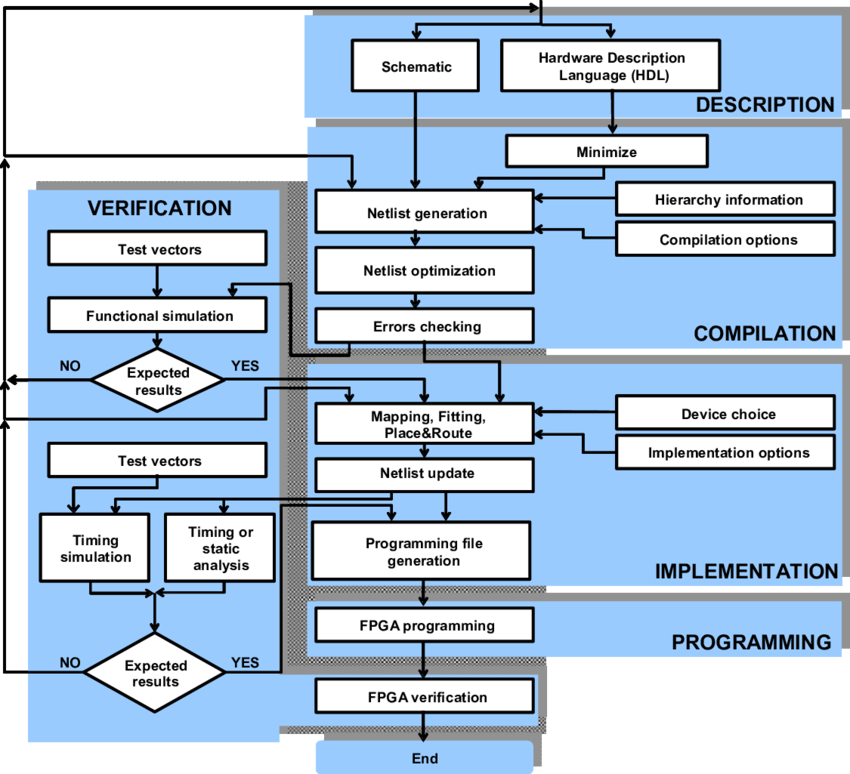
- VHDL Is Not a Simulation Tool: VHDL is used to define hardware, but simulation tools run VHDL code to test the behavior of these hardware designs. Simulation tools like ModelSim and QuestaSim use VHDL code to simulate how circuits will work. VHDL itself does not perform simulations; it provides the definitions. Simply put, VHDL provides the recipe, and the simulation tools do the cooking.
- VHDL Is Not a Synthesis Tool: After writing VHDL code as a hardware description language, synthesis tools are needed to convert it into physical circuits for FPGA or ASIC. Synthesis tools take VHDL code and transform it into physical circuit elements. VHDL itself does not perform this transformation; it only contains the definitions. So, we provide the recipe, now it’s time to cook in the kitchen!
- VHDL Is Not a Software Modeling Language: VHDL describes how hardware behaves over time. While software modeling languages usually work with abstract operations and data structures, VHDL is used to model the timing, delay, and parallel operations of physical hardware components. In short, modeling software is one thing; modeling hardware is another.
- VHDL Does Not Require an Easy and Quick Learning Process: VHDL is a complex language that takes time and effort to learn. It can be challenging for beginners and requires patience and practice. However, with the right resources and regular practice, mastering VHDL is possible. Patience, time, and lots of coffee!
- VHDL Does Not Solve All Digital Design Problems: While VHDL is a powerful and flexible tool, it is not sufficient to solve all digital design problems. Sometimes, other hardware description languages (e.g., Verilog) or different design methods are needed. Designers should choose the tools and methods that best meet their project’s requirements. Using the right tool for the right job is always important.
In this article, we discussed what VHDL is, what it isn’t, and why it is important. Understanding VHDL’s place and advantages in the digital design world is an important step toward success in your projects. In future articles, we will delve into more detailed use cases and example projects with VHDL. Stay tuned!
This article was first published on LinkedIn on 27 May 2024.