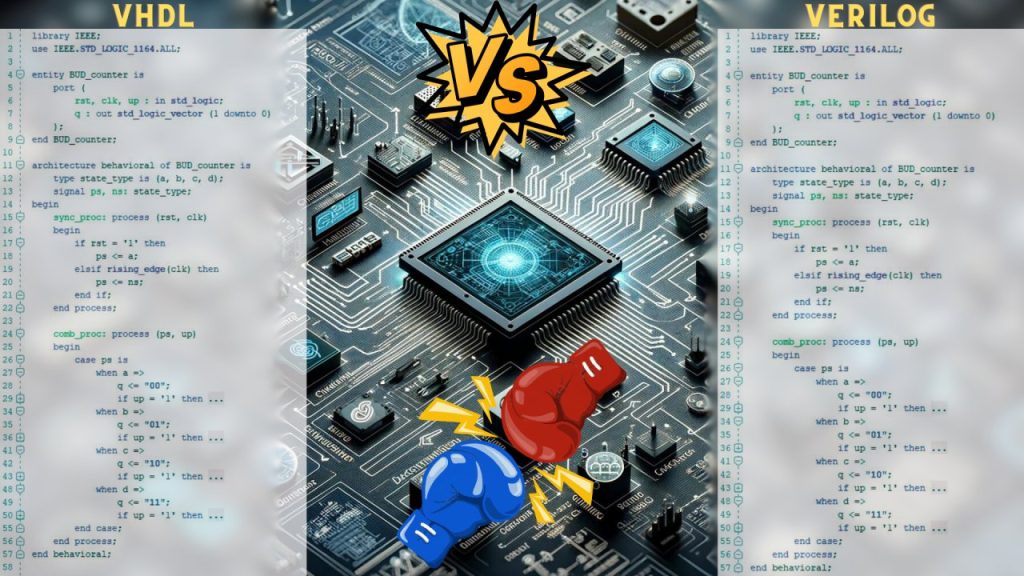
In the world of digital design, two important hardware description languages (HDLs) are frequently used: VHDL and Verilog. Let’s explore which projects these languages are preferred for and why, as well as which companies have achieved success using them.
VHDL: Preferred for Strong Type Checking and Security
VHDL is preferred in projects with high security requirements due to its strong type checking and modular structure. The defense industry and academic circles benefit from the reliability and accuracy provided by VHDL to develop complex projects.
Example Project: M60 T Tank Imaging Unit
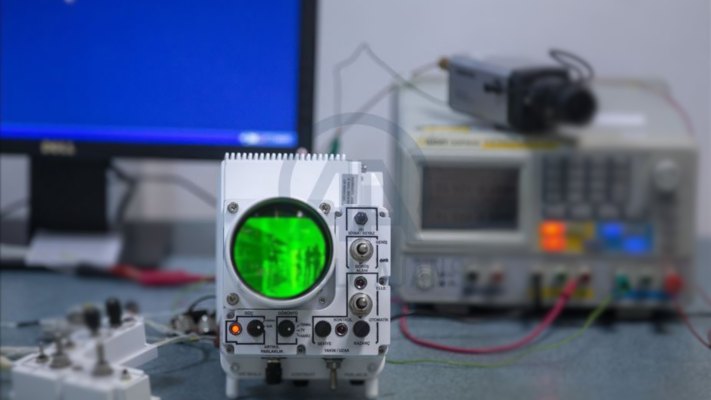
In one project, we designed the imaging unit of M60 T tanks using VHDL. Our goal was to reliably and accurately handle high-speed video data streams. With VHDL’s strong type checking and detailed error detection mechanisms, we were able to analyze high-resolution video data down to the finest detail. This improved the performance of the tank’s imaging system, ensuring more reliable and accurate data transmission.
Verilog: Ideal for Rapid Prototyping and Commercial Products
Verilog, with its C-like syntax and flexible structure, is preferred for rapid prototyping and commercial product development processes. Especially in the electronics and semiconductor industries, Verilog’s flexibility and extensive tool support offer significant advantages.
Example Project: Ultrasonic NDT Devices
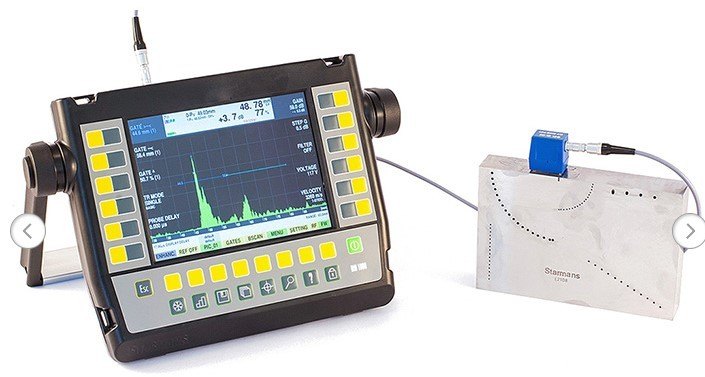
While working at a company, we designed the FPGA part of an Ultrasonic Non-Destructive Testing (NDT) Device using Verilog. Our goal was to develop a system that collects and analyzes high-resolution ultrasonic data. Thanks to Verilog’s rapid prototyping capabilities, we accelerated the design process and brought the product to market more quickly.
VHDL and Verilog: Widely Used in FPGA and ASIC Designs
Both languages are widely used in FPGA (Field-Programmable Gate Array) and ASIC (Application-Specific Integrated Circuit) designs. FPGAs, with their flexible and reprogrammable structures, are preferred in prototyping and low-volume production, while ASICs are used in high-volume and specialized productions.
Example Project: Innovation in the Automotive Industry
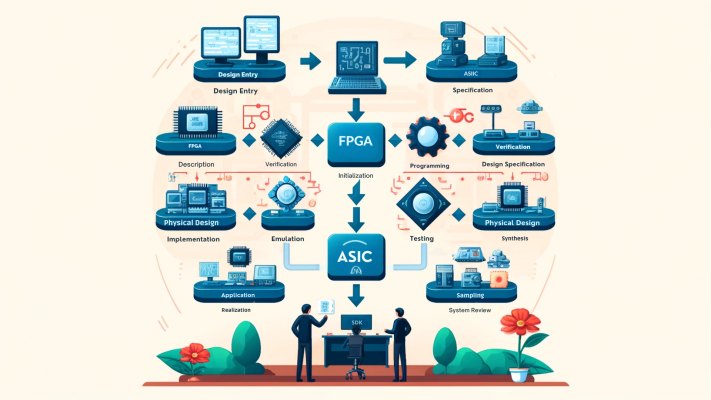
An automotive company developed various digital control systems for their next-generation electric vehicles using both VHDL and Verilog. VHDL was preferred for battery management systems running on FPGAs, while Verilog was used in motor control systems. This hybrid approach increased the flexibility of the design process, enabling the development of high-performance and reliable systems.
Why Are These Languages Used?
- Strong Type Checking (VHDL): In safety-critical projects, strong type checking and error detection mechanisms ensure error-free and reliable designs.
- Flexibility and Speed (Verilog): With its C-like syntax and flexible structure, Verilog saves time in rapid prototyping and commercial product development processes.
- Extensive Tool and Library Support: Both languages offer extensive tool and library support, allowing designers to develop the most suitable solutions for their needs.
- Modularity and Reusability: Modular design features enable the reuse of components and speed up the design processes.
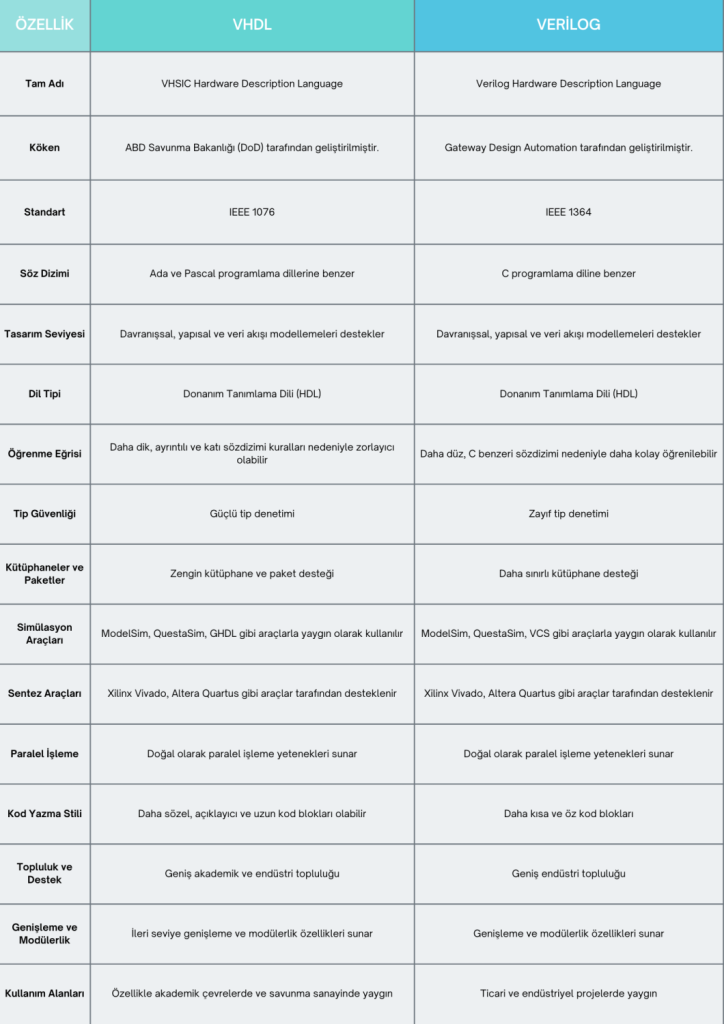
In conclusion, VHDL and Verilog are two powerful tools that complement each other in the world of digital design. Depending on the project requirements, one or both of these languages can be chosen to develop successful and innovative solutions.
This article was first published on LinkedIn on 1 June 2024.